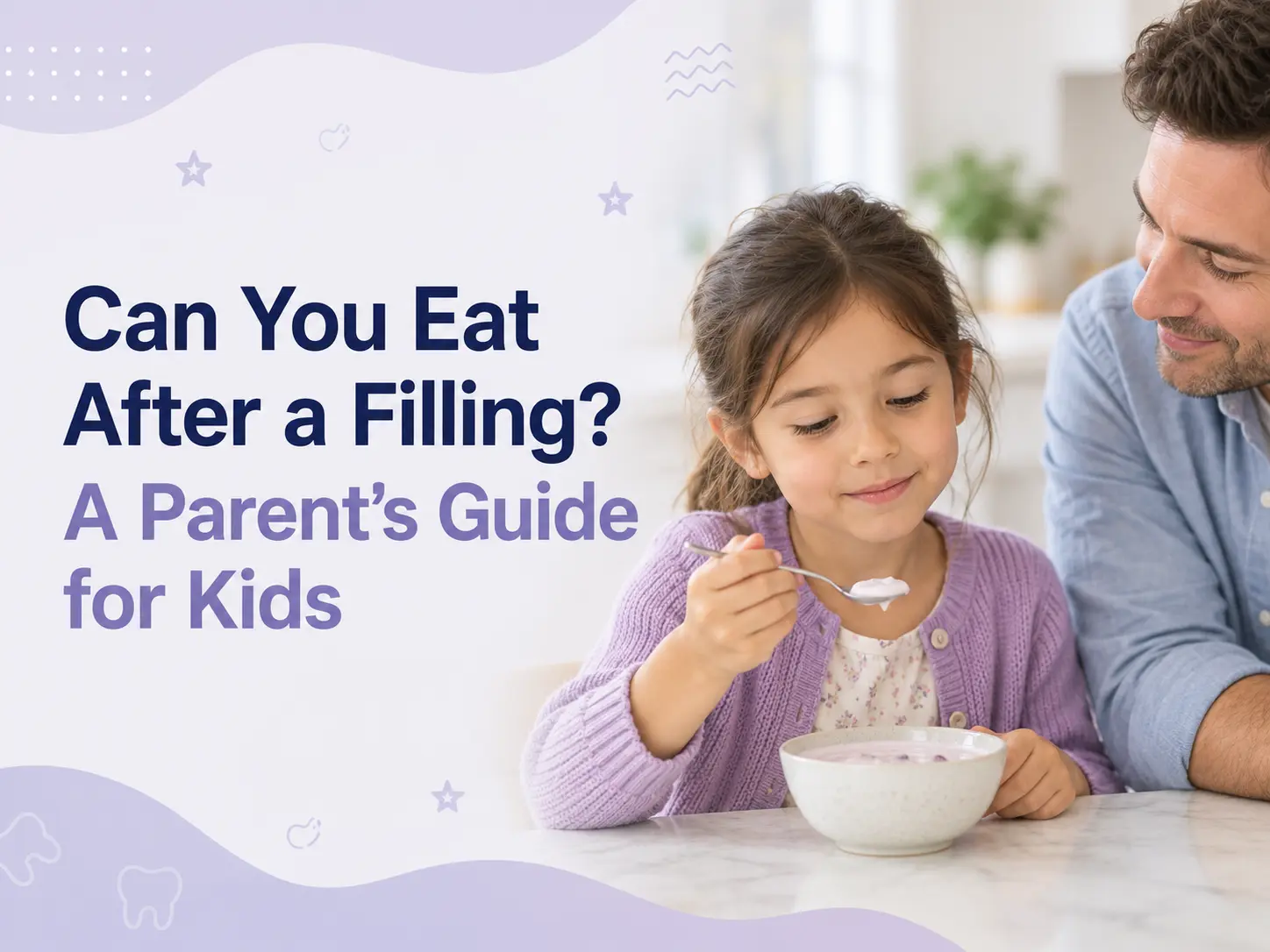
Yes, most children can eat after a filling, but they should usually wait until the numb feeling is gone. The safest timing also depends on the filling type, your child’s comfort, and the dentist’s instructions. This guide explains when eating is safe, which foods work best, and what warning signs parents should watch.
Can You Eat After A Filling Right Away?
A white filling is fully hardened before your child leaves the dental office, so eating will not normally damage it. However, chewing while the lips, cheek, or tongue are numb can lead to accidental biting or burns from hot food.
A silver filling may need extra time before your child chews directly on that tooth. Dr. Kat can tell you which material was used and provide a clear waiting time based on your child’s treatment.
Why Numbness Changes The Answer
A numb child may not feel where their cheek or tongue is while chewing. They may also struggle to judge food temperature or chewing pressure. Waiting for a normal feeling is safer than following a fixed one-hour rule.
How Parents Can Check Eating Safety
Before offering solid food, ask your child to smile, speak, and gently touch their lips and cheek. They should feel both sides normally. Start with a sip of room-temperature water, then ask them to close their teeth gently.
If the lip still feels heavy, the child is drooling, or the bite feels painful, wait longer. The dentist’s personal instructions should always come first.
What To Eat After A Filling
When deciding what to eat after a filling, begin with foods that are soft, easy to chew, and not extremely hot or cold.
Easy First Meal Ideas
Good choices include yogurt, applesauce, mashed potatoes, scrambled eggs, oatmeal, soft pasta, mashed banana, soft rice, and well-cooked vegetables. Serve food warm or at room temperature if the filled tooth feels sensitive.
Simple Meals For School-Age Kids
Try scrambled eggs with mashed avocado, soft pasta with cooked vegetables, rice with tender chicken, yogurt with banana, or warm macaroni and cheese. Cutting food into small pieces helps children chew slowly and use the opposite side when needed.
Foods After Dental Filling To Avoid
The least helpful foods after dental filling treatment are hard, sticky, chewy, or extremely hot. Avoid gum, gummies, caramel, hard candy, popcorn, ice, nuts, crunchy chips, tough meat, and hard pizza crust during the early adjustment period.
Sticky foods may pull at new dental work, while hard foods place strong pressure on a tender tooth. Sugary snacks also feed the germs that cause new cavities around other teeth.
Better Food Swaps
Choose applesauce instead of a crunchy apple, soft pasta instead of hard crust, mashed banana instead of raw carrots, and yogurt instead of sticky candy. These swaps let a hungry child eat comfortably without turning every meal into a struggle.
When Can Kids Eat Normally Again?
Knowing when to eat after filling treatment is less about watching the clock and more about checking your child. Regular meals can usually return when numbness is gone, chewing feels comfortable, and the filled tooth does not feel taller than nearby teeth.
Some children prefer softer meals for the rest of the day. If your dentist gave a longer wait time, follow that advice.
Dental Filling Aftercare For Day One
Good dental filling aftercare is simple. Supervise younger children until full feeling returns, offer water, and encourage slow chewing. Your child can usually brush as normal, but should be gentle around a sore tooth and avoid repeatedly touching the filling.
Parents exploring tooth-colored fillings can ask Dr. Kat how food choices and home care may differ for their child. Continue regular meals rather than frequent sugary snacks, and follow separate instructions if calming medicine was used.
Numbness After Filling Warning Signs
Numbness after filling can make a child say their lip feels large, strange, or tingly. Watch for cheek sucking, lip chewing, drooling, or trouble controlling food.
The American Academy of Pediatric Dentistry’s guidance advises caregivers to prevent lip or cheek biting and hot food while numbness remains.
A small bitten area may become white or swollen. Contact the dentist if there is heavy bleeding, increasing swelling, worsening pain, or difficulty drinking.
When Should Parents Call The Dentist?
Contact the office if pain is strong, worsening, or keeping your child from eating. Repeated sharp pain when biting may mean the filling is sitting slightly too high and needs checking.
Also call if the filling feels loose, rough, cracked, or missing, or if swelling develops. Urgent dental care for children may be appropriate for severe pain, facial swelling, dental injury, or a problem that cannot wait.
Help Your Child Eat Comfortably
The safest plan is easy to remember: wait for normal feeling, begin with soft food, and watch how your child bites. Follow the instructions provided after treatment, because filling type and comfort can change the timeline.
Explore care for damaged teeth when you need more information about repairing and protecting a child’s tooth.
Why Choose Everyday Smiles Pediatric Dentistry?
At Everyday Smiles Pediatric Dentistry, parents receive clear, child-focused guidance for comfortable recovery. The team also supports healthy routines that help repaired teeth stay clean, strong, and comfortable. Dr. Kat helps families understand what children can eat, how to protect a new filling, and which changes deserve a follow-up visit.
Common Parent Questions
Can My Child Drink Water After A Filling?
Room-temperature water is usually fine after a filling. Encourage small sips while the mouth is numb, since your child may dribble or bite their lip. Avoid very hot drinks until normal feeling returns and cold drinks if the tooth feels sensitive.
Can My Child Eat While Their Mouth Is Numb?
It is safer to wait until the lips, cheek, and tongue feel normal. A numb child may bite these areas without noticing or misjudge hot food. If eating cannot wait, use a spoon, choose soft food, and supervise every bite closely.
Should My Child Chew On The Other Side?
Chewing on the other side can reduce pressure on a newly filled or tender tooth. Cut food into small pieces and encourage slow bites. Your child can use both sides again when chewing feels comfortable and the dentist has not given special limits.
Can My Child Eat Pizza, Chips, Or Candy?
Soft pizza toppings may be manageable once numbness is gone, but hard crust, crunchy chips, and sticky candy should wait. These foods require stronger chewing or can pull at dental work. Choose soft pasta, yogurt, eggs, or rice instead.
Is Tooth Pain When Biting Normal After A Filling?
Mild tenderness can happen as the tooth settles, but repeated sharp pain, worsening discomfort, or a tooth that feels too tall should be checked. The dentist may need to smooth a raised area so your child can bite and eat comfortably.