A baby tooth may fall out after an accident, deep decay, or an extraction. The gap can look harmless, but nearby teeth may move into it.
A space maintainer for kids holds that opening until the adult tooth is ready. Not every missing baby tooth needs one. The dentist must consider which tooth is missing, when it was lost, and what is happening below the gums.
What Is a Dental Space Maintainer?
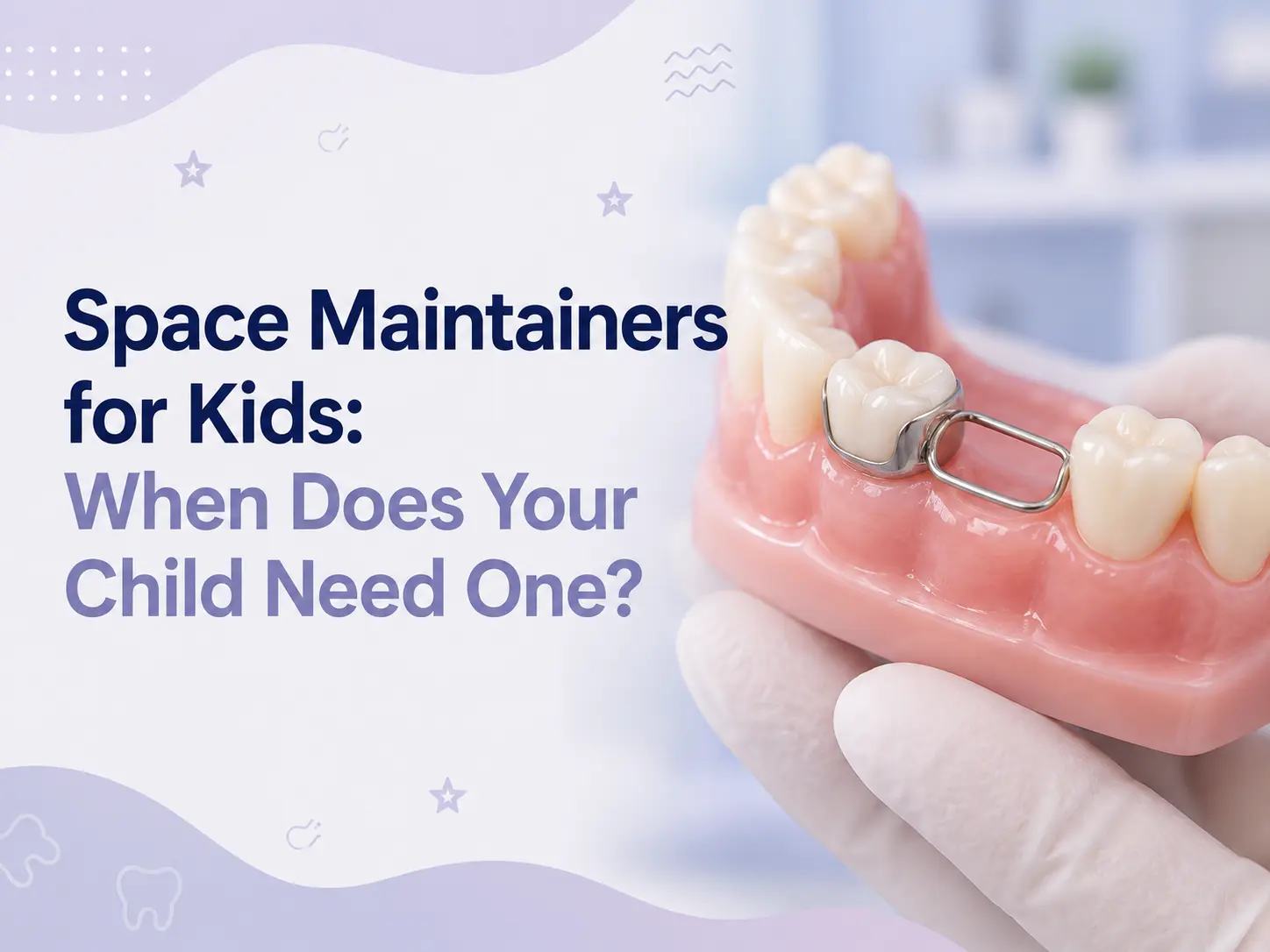
A dental space maintainer is a custom-made appliance that saves the place left by an early missing baby tooth. It stops nearby teeth from leaning or sliding into the gap.
Baby teeth guide adult teeth. When one disappears too soon, its replacement may have less room to come in. Protecting that space can reduce avoidable crowding.
When Does a Space Maintainer for Kids Help?
After Early Baby Tooth Loss
Premature baby tooth loss means a baby tooth is gone well before its natural time. This may happen because of a fall, a cracked tooth, or decay that cannot be repaired. A back baby tooth lost years before its replacement is due may need space protection.
After a Baby Tooth Extraction
A space maintainer after extraction may be recommended when removing a back baby tooth leaves a gap that must remain open. Parents can review what to expect from baby tooth extraction before the appointment.
Placement is not automatic. A front baby tooth often needs different planning because nearby teeth may be less likely to close the gap.
When a Space Maintainer May Not Be Needed
A maintainer may not help when the adult tooth is already close to coming in, the baby tooth fell out near its expected time, or enough space remains. Monitoring may be better in some cases.
How Does the Dentist Decide?
The dentist considers the missing tooth, the child’s age, existing crowding, time since tooth loss, and whether nearby teeth have moved. An X-ray can show the adult tooth’s position and development.
The American Academy of Pediatric Dentistry guidance also highlights tooth location, available space, oral care, and the child’s ability to manage the appliance. Digital dental X-rays help plan around permanent tooth eruption, meaning the adult tooth coming through the gums.
Which Types of Space Maintainers Fit?
Fixed Space Maintainers
Fixed maintainers attach to one or more teeth and stay in the mouth. They suit many younger children because they cannot be lost. A small band and wire may protect a single gap.
Removable Space Maintainers
A removable option can be taken out for cleaning. It may suit an older child who can wear and store it safely. It is less useful when a child often forgets it.
Choosing the Right Space Maintainer
The types of space maintainers are selected according to tooth location, number of missing teeth, age, bite, and cleaning habits. A fixed option offers consistency. A removable option offers easier cleaning but requires responsibility.
What Happens During Space Maintainer Placement?
The dentist checks the gap and surrounding teeth. An X-ray may be taken, followed by a mold or scan for a close fit. A digital dental scanner can capture tooth shape without a tray of impression material.
The dentist then checks comfort and bite. Mild pressure or an unusual feeling may occur at first, but ongoing pain, sharp edges, or gum rubbing should be reported.
How Should Parents Protect a Space Maintainer?
Clean Around the Space Maintainer
Help your child brush around the band, wire, and supporting teeth twice daily. Food and sticky buildup can collect there, raising the risk of decay. Younger children may need a parent to check after brushing.
Avoid Foods That Damage Space Maintainers
Most children can eat normally after adjusting. Avoid gum, caramel, gummies, sticky candy, ice, and very hard foods that may bend or loosen the appliance. Cut crunchy foods into smaller pieces.
Check a Loose or Broken Space Maintainer
Tell your child not to push it with their tongue or fingers. If it becomes loose, falls out, or cuts the gums, save it and contact emergency pediatric dental care. Do not glue or bend it at home.
How Long Does a Space Maintainer Stay In?
A space maintainer usually stays until the adult tooth begins entering the saved area. This may take months or several years, depending on the tooth and the child’s development.
Regular visits let the dentist check the fit, cleaning, supporting teeth, and incoming adult teeth. Removing it too early may allow the gap to shrink, while leaving it too long may block the new tooth.
Can a Space Maintainer Prevent Braces?
A space maintainer can reduce crowding caused by nearby teeth moving into an early gap. It cannot guarantee that braces will never be needed. Jaw growth, inherited tooth size, missing adult teeth, and crowding elsewhere can still affect alignment.
It protects existing room rather than straightening the whole smile.
When Should Parents Call the Dentist?
Contact the dentist soon after unexpected baby tooth loss or when an extraction is recommended. Do not wait for visible shifting because reopening lost space may be harder than protecting it early.
Call sooner if the appliance is loose, broken, painful, trapping food repeatedly, or if the adult tooth appears. Routine preventative pediatric dental care helps the dentist adjust or remove it at the right time.
Why Choose Everyday Smiles Pediatric Dentistry?
Everyday Smiles Pediatric Dentistry provides thoughtful, child-focused care for early tooth loss and spacing concerns. Dr. Kat evaluates your child’s age, tooth development, comfort, and cleaning needs before recommending treatment. Families receive clear explanations, practical home-care guidance, modern technology, and follow-up visits designed to protect growing smiles with lasting confidence.
Space Maintainer FAQs
Does a Space Maintainer Hurt?
Placement should not cause lasting pain. Your child may notice pressure or a strange feeling for a few days. Call the dentist if pain worsens, the wire feels sharp, the gums swell, or your child cannot eat comfortably.
Can My Child Eat Normally With One?
Most children return to normal meals after a short adjustment. Avoid sticky candy, gum, ice, and very hard foods because they can loosen or bend the appliance. Cut crunchy foods into small pieces and encourage slow chewing.
Does an Early Lost Front Tooth Need One?
Not always. Front baby teeth are less likely than back teeth to cause harmful space loss, but the dentist should check the gap, bite, age, and adult tooth position. Appearance, speech, or other concerns may affect the plan.
How Soon Is It Needed After an Extraction?
The dentist should evaluate the space when the extraction is planned or soon afterward. Timing depends on the tooth and the adult replacement below it. Delaying too long may let nearby teeth move into the opening.
What Should I Do If It Falls Out?
Remove it from the mouth if it is completely loose and can be taken out safely, then save it in a clean container. Call the dental office promptly. Do not force it back, bend the wire, or use household glue.