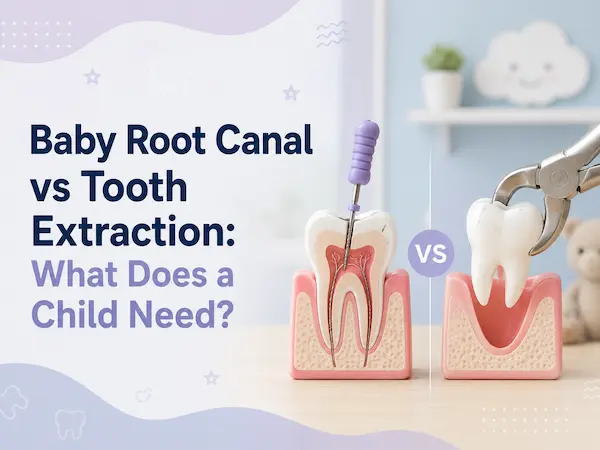
A recommendation for major treatment on a baby tooth can feel alarming. The choice between a baby root canal and removal depends on whether the tooth can be repaired, how long it is needed, and whether infection has spread.
In a root canal vs extraction decision, the goal is to stop pain and protect your child’s developing smile. An exam and dental images help identify the safer option.
Baby Tooth Infection: Why Waiting Can Hurt
A damaged baby tooth may cause chewing pain, sensitivity, a dark spot, gum swelling, or a small bump near the tooth. Some children avoid food or wake at night without clearly describing the pain.
Waiting for the tooth to fall out can make the problem worsen. Facial swelling, fever, trouble swallowing, or rapidly increasing pain needs prompt emergency pediatric dental care. Early infected baby tooth treatment may provide more choices than delayed care.
Baby Root Canal: How It Saves The Tooth
A baby root canal removes damaged material from inside the tooth, cleans the area, and seals it. The tooth stays in place, and a protective cap is often added so it can handle chewing until it falls out naturally.
You may also hear the phrase pulpotomy for children. This usually means removing only the damaged part inside the top of the tooth while the healthy area near the roots remains. The dentist chooses the approach after examining the tooth.
When Can The Tooth Be Saved?
Saving a baby tooth may be possible when enough strong tooth remains and the infection has not badly affected the surrounding area. Dr. Kat shows the problem to the parents on dental images and explains why keeping or removing the tooth is recommended.
Tooth Extraction For Kids: When Removal Helps
A tooth extraction may be better when the tooth is broken too deeply, very little healthy structure remains, infection has spread around the roots, or the tooth is close to falling out.
Tooth extraction for kids may also be considered after a failed repair. Removal solves the immediate problem, but the dentist must consider the gap left behind.
Root Canal Vs Extraction: What Changes?
| Comparison | Baby root canal | Tooth extraction |
|---|---|---|
| Main goal | Keep the baby tooth | Remove the damaged tooth |
| Best fit | Tooth is repairable | Tooth cannot be repaired |
| Tooth remains | Yes | No |
| Protective cap | Often needed | Not needed |
| Space maintainer | Usually unnecessary | Sometimes recommended |
| Healing | Mild tenderness | Gum must heal |
| Follow-up | Monitor tooth and cap | Monitor healing and spacing |
The faster procedure is not automatically better. Saving a back tooth in a five-year-old may preserve chewing and spacing for years, while removing a loose tooth may suit an older child whose adult tooth is nearly ready.
Treatment Choice: What Dentists Check
Healthy Tooth Structure
Enough strong teeth must remain to support a reliable repair and cap.
Infection And Root Health
The exam and digital dental images help show whether the problem is limited to the tooth or has reached nearby areas.
Child’s Age And Tooth Timing
A tooth needed for several more years may be worth saving. One expected to loosen soon may gain less from complex treatment.
Tooth Location And Daily Function
Back teeth support chewing and hold room for adult teeth. Front teeth can affect biting, speech, and appearance.
Comfort And Cooperation
The dentist considers age, anxiety, health needs, and the child’s ability to remain comfortable. Dr. Kat guides parents through appropriate options and explains what their child may experience.
The American Academy of Pediatric Dentistry explains that treatment decisions consider symptoms, an examination, dental images, and the condition inside and around the tooth.
Baby Tooth Benefits: Why Saving It Matters
Saving a baby tooth can support chewing, speech, and proper spacing for the adult tooth below it. They also guide nearby teeth.
However, not every baby tooth should be saved. The best option removes infection, restores comfort, and protects healthy development.
Space Maintainer: Will Your Child Need One?
When a baby tooth is removed early, nearby teeth may move toward the gap. A space maintainer may hold the space until the adult tooth is ready.
Not every extraction needs one. The decision depends on the missing tooth, age, available room, and the adult tooth’s position.
Child Dental Recovery: What To Expect
After A Baby Root Canal
Temporary numbness and mild tenderness are possible. Wait until numbness fades before chewing to prevent lip or cheek biting. Offer softer foods if needed, keep the tooth clean, and follow cap-care instructions.
After A Tooth Extraction
Mild bleeding and soreness can occur as the gum heals. Follow instructions for gauze, food, brushing, and activity. Call the office if pain or swelling increases, bleeding does not slow, or your child develops fever or trouble swallowing.
Parent Questions: What To Ask First
Before choosing treatment, ask your child’s dentist these questions to understand the tooth’s condition, available options, and what to expect next:
- Can the tooth still be repaired?
- How soon should the baby tooth fall out naturally?
- Will my child need a cap after treatment?
- Will a space maintainer be needed after removal?
- How many dental visits will treatment require?
- What comfort options are suitable for my child?
- What could happen if treatment is delayed?
Dr. Kat can use the exam and images to answer these questions for your child’s tooth instead of applying a one-size-fits-all rule.
Child’s Smile: Choose The Safer Path
A baby root canal may help when the tooth is repairable and still needed for years. Extraction may be safer when damage is extensive or the tooth is close to falling out.
Ask what the exam and images show, then discuss recovery, spacing, comfort, and follow-up before deciding.
Why Choose Everyday Smiles Pediatric Dentistry?
Everyday Smiles Pediatric Dentistry provides child-focused care in a welcoming New Windsor setting. Dr. Kat listens to parents, explains dental images in clear language, and helps children understand each step. Families receive personalized guidance when comparing tooth-saving treatment, extraction, comfort options, recovery needs, and future spacing concerns for each child.
Baby Tooth Treatment FAQs
Is A Baby Root Canal Painful?
The tooth is numbed before treatment, so a child should not feel the work itself. Mild soreness may follow. Ask how comfort will be managed, when your child can eat, and which changes after treatment require a call.
Why Not Pull A Baby Tooth That Will Fall Out?
A baby tooth may still be needed for chewing and to hold space for the adult tooth. Removing it too early can allow nearby teeth to shift, so the dentist weighs the tooth’s condition against how long it should remain.
Can An Infected Baby Tooth Affect The Adult Tooth?
A serious untreated infection can spread beyond the baby tooth and may threaten nearby areas or the developing tooth below. Prompt evaluation helps control the problem and determines whether saving or removing the tooth is safer.
Does Every Extraction Need A Space Maintainer?
No. A space maintainer depends on the missing tooth, your child’s age, available room, and how close the adult tooth is to coming in. The dentist may recommend one or simply monitor the gap during checkups.
What Happens If Baby Tooth Treatment Is Delayed?
Pain may worsen, infection may spread, and a tooth that was once repairable may eventually need removal. Seek prompt care for swelling, fever, nighttime pain, trouble eating, or a gum bump near the damaged tooth.