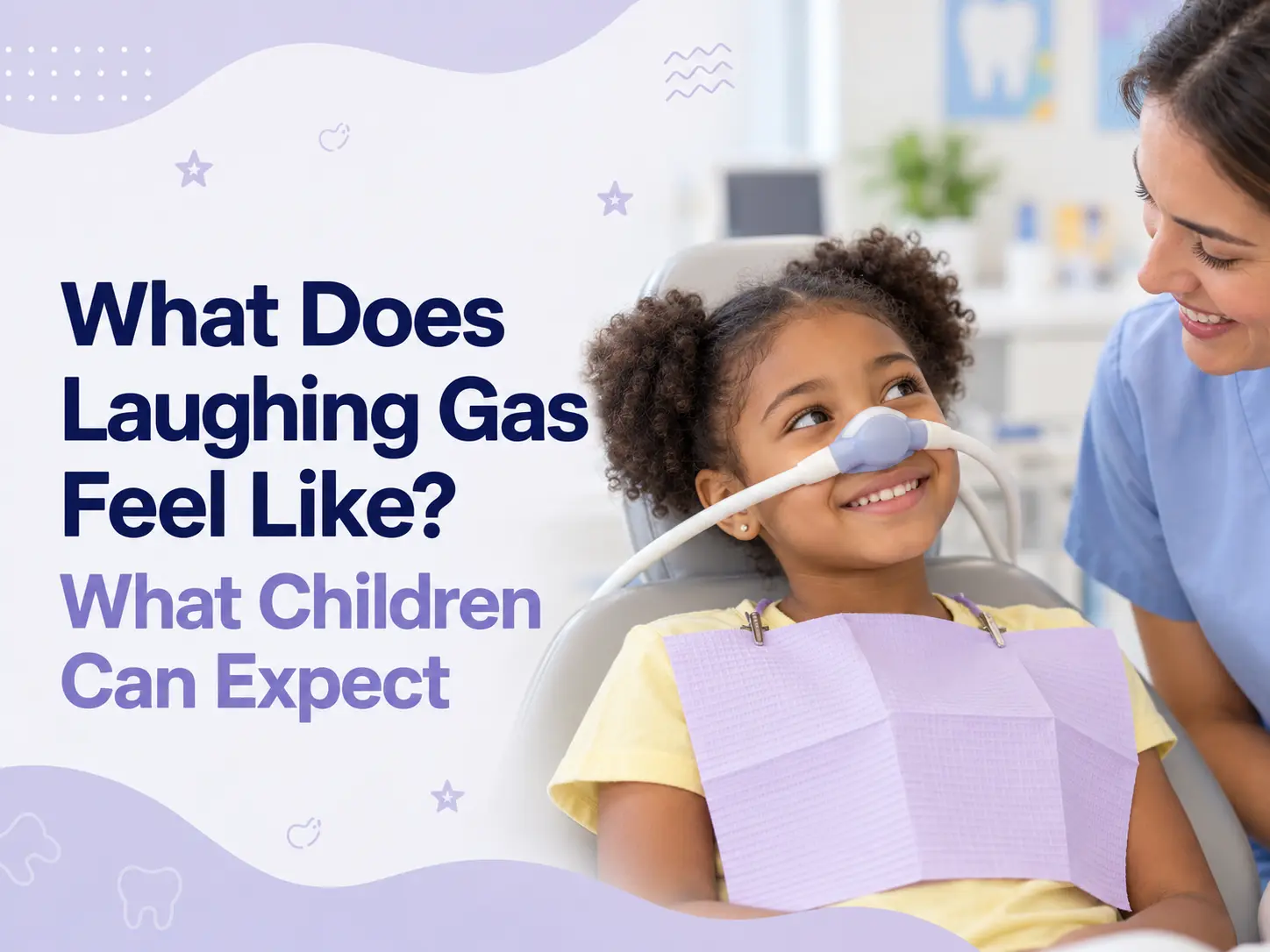
If your child needs dental treatment, you may be wondering, what does laughing gas feel like? Most children describe a calm, warm, light, floaty, or slightly tingly feeling. They usually stay awake, hear the dentist, and answer questions throughout the visit.
The name can be misleading because not every child laughs. Some become quiet, sleepy, or silly. Knowing this helps you explain the visit honestly.
What Does Laughing Gas Feel Like For Children?
Laughing gas helps reduce worry as a child breathes through a small nose mask. The effects of laughing gas usually begin gradually.
Calm, Warm, Or Floaty
A child may say their arms feel heavy, their fingers feel buzzy, or their body feels warm. Others describe floating or dreaming. Some giggle, but many simply relax.
Parents searching for nitrous oxide sensations are usually looking for these descriptions. Every child responds differently, so one may talk more while another becomes quiet.
Dr. Kat helps children understand these feelings with age-appropriate words and encourages them to report anything uncomfortable.
Will Laughing Gas Keep Children Awake?
Laughing gas does not usually put a child to sleep. It is often described as conscious sedation for kids, which simply means the child stays awake while feeling calmer.
What Children Can Hear And Say
Most children can hear the team, follow directions, answer questions, and use an agreed hand signal. They may feel dreamy but should know where they are.
Can Children Still Feel Pain?
Laughing gas reduces fear and can make discomfort feel less important, but it does not always replace numbing medicine. A child may still notice pressure, movement, sounds, or vibration during a composite filling or another treatment.
Dr. Kat can explain the numbing and comfort plan beforehand so parents can prepare their child accurately.
How Does A Laughing Gas Visit Work?
Understanding the timeline makes the dental sedation experience less confusing for both children and parents.
Before The Nose Mask
The team places a small mask over the child’s nose. The child breathes normally as relaxation begins, while the team checks the response and adjusts when needed.
During Dental Treatment
The child remains awake and can usually speak, listen, or focus on a distraction. For treatments such as cavity treatment options, the team may also use separate numbing care.
After The Mask Comes Off
When treatment ends, the gas is stopped and the light, warm, or tingly feelings normally fade within minutes. The American Academy of Pediatrics’ parent guide also explains that children generally stay awake and become more relaxed rather than falling asleep.
What If Laughing Gas Feels Strange?
Some children dislike feeling floaty, heavy, or different. Others may fear the nose mask, especially when sensitive to touch or face coverings.
Tell your child they can raise a hand or ask for a pause. The team can check the mask, reassure them, adjust the amount, or stop when appropriate.
Which Laughing Gas Side Effects Can Happen?
Temporary laughing gas side effects can include nausea, dizziness, headache, tiredness, shivering, or restlessness. Younger children may struggle to describe them, so adults should watch their behavior.
Tell the team immediately if your child feels sick, frightened, overly sleepy, or unable to breathe comfortably through the nose. After leaving, call the dental office if vomiting, headache, unusual behavior, or discomfort continues.
When Will Laughing Gas Wear Off?
The effects usually fade quickly after the gas stops. The dentist may have your child breathe normally for a few minutes before sitting up.
Follow the office’s instructions for eating, activity, and leaving the appointment because recovery can vary.
How Can Parents Prepare Children For Laughing Gas?
Use simple, truthful language. Avoid promising they will feel nothing or definitely laugh.
Words Parents Can Use
Try saying: “You will wear a small nose mask and breathe normally. Your body may feel warm, light, or sleepy, but you will still be awake and able to talk.”
Follow the office’s food instructions, report a stuffy nose, and bring an approved comfort item. Agree on a hand signal before treatment. A visit with a kid-friendly dentist can also help children meet the team and become familiar with the setting.
Is Laughing Gas Right For Every Child?
Laughing gas may help children who feel worried, gag easily, or need support sitting still. It may be harder when a child refuses the mask, has a blocked nose, or dislikes unfamiliar sensations.
The choice also depends on the treatment, health history, communication needs, and past dental experiences. Dr. Kat guides parents through these factors and discusses alternatives when needed.
Ask how pain will be controlled, what your child should eat, what happens if the mask is refused, and how the team will check comfort.
Help Your Child Feel Ready For Laughing Gas
Laughing gas often feels calm, light, warm, floaty, or tingly, while the child remains awake and able to communicate. Prepare your child with honest, simple words, follow the dental office’s instructions, and share concerns before treatment. Clear expectations can make the appointment feel more predictable and manageable.
Why Choose Everyday Smiles Pediatric Dentistry?
Everyday Smiles Pediatric Dentistry supports children with clear explanations, patient pacing, and practical guidance for parents. Dr. Kat helps families understand what a child may feel before treatment and how comfort will be checked throughout the visit. Explore our pediatric dental services to plan care around your child’s needs today.
Quick Laughing Gas FAQs
Does Laughing Gas Always Make Children Laugh?
No. Many children feel calm, warm, light, sleepy, or slightly tingly without laughing. The name describes one possible reaction, not a guaranteed result. Your child may become quiet, talkative, dreamy, or mildly silly instead.
Can My Child Talk During Dental Treatment?
Usually, yes. Children normally remain awake and can answer questions, follow directions, or use a hand signal. Their responses may be slower because they feel relaxed, but they should still be able to communicate discomfort.
What If My Child Refuses The Nose Mask?
The team may introduce the mask slowly, let the child touch it, explain its purpose, or practice breathing first. If the child remains distressed, the dentist can stop and discuss another comfort plan rather than forcing the mask.
Will Laughing Gas Stop All Dental Pain?
Not always. Laughing gas mainly reduces worry and changes how strongly discomfort is noticed. Dental work may still require separate numbing medicine, and children can still notice pressure, movement, sounds, or vibration.
Can Laughing Gas Make My Child Feel Sick?
Mild nausea or dizziness can happen, especially when a child is anxious or has not followed the office’s eating directions. Tell the dental team immediately, and contact the office if vomiting or discomfort continues after leaving.