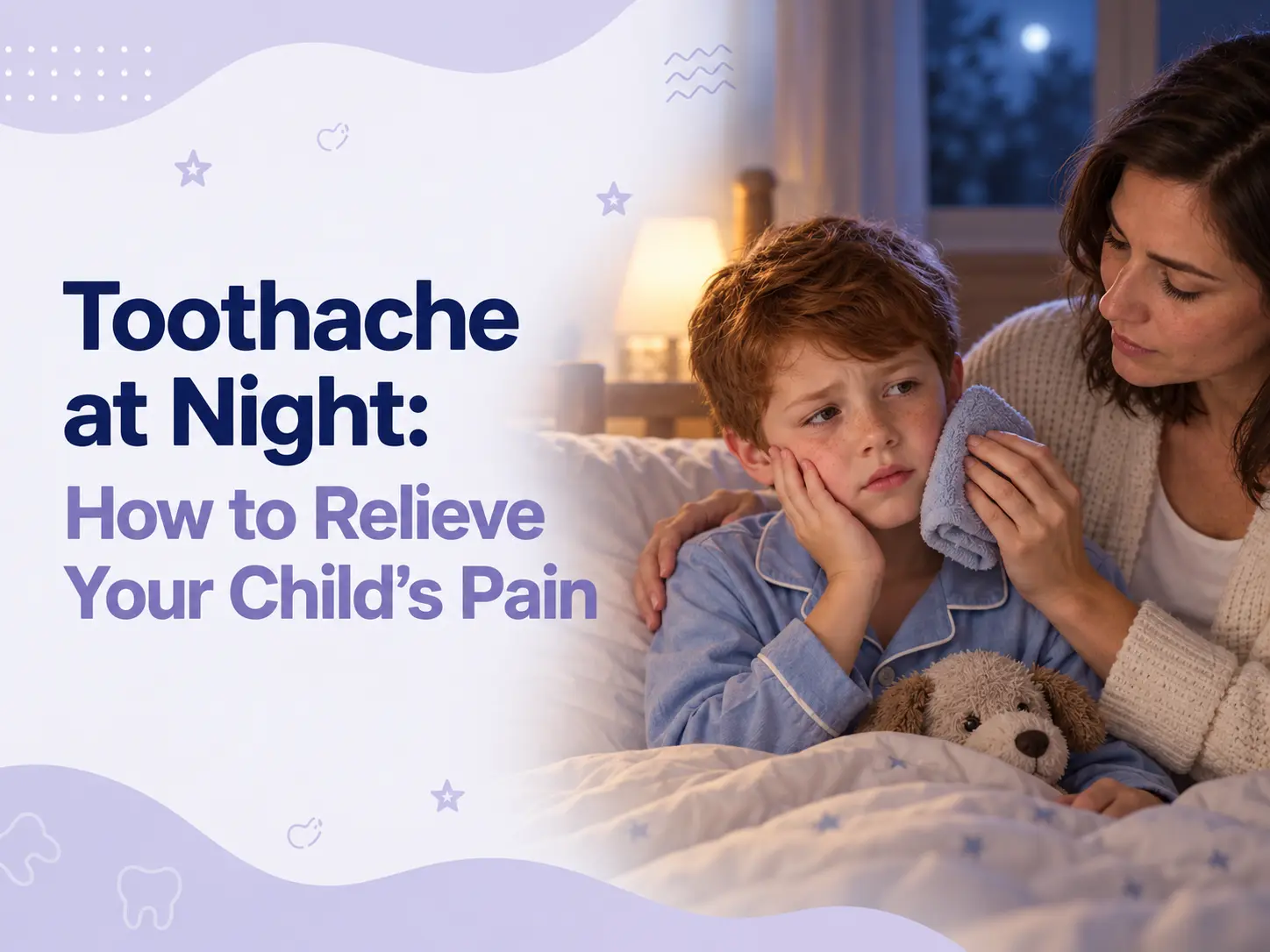
A child waking with a toothache at night can leave the whole family worried. First, ease the pain, check for warning signs, and decide whether it can wait until morning.
Home care may reduce nighttime tooth pain, but it cannot fix the cause. Use these steps for temporary comfort, then arrange a dental visit.
Check Child Toothache Warning Signs
Ask where it hurts, when it started, and whether your child fell or bit something hard. Look for swelling, bleeding, or a moved tooth.
Call An Emergency Dentist Now
Contact an emergency dentist for toothache if the pain is intense, prevents sleep, or comes with cheek or gum swelling. Call as well if a tooth is cracked, pushed out of place, or painful after a fall.
Go To The ER Now
Go to the ER if swelling spreads toward the eye or neck, your child struggles to breathe or swallow, heavy bleeding will not stop, or your child appears seriously unwell. These signs should not wait for morning.
Relieve A Toothache At Night
These steps provide temporary child toothache relief until a dentist can examine the area.
Keep Your Child Upright
Let your child rest with the head slightly raised instead of lying flat. This may make throbbing less noticeable.
Look Inside The Mouth
Use a flashlight to check for food, a loose tooth, swollen gums, a broken edge, or a sore spot. Do not poke the area or force the mouth open.
Clean The Area Gently
Help your child brush softly. If food is caught between teeth, floss slowly and stop if it causes sharp pain or bleeding. A child who can rinse and spit safely may use warm water.
Apply A Cold Pack
Wrap a cold pack in a clean cloth and hold it against the outside of the cheek for short periods. Never put ice directly on the skin or tooth.
Use Pain Relief Carefully
Use only a child-safe pain medicine your child can normally take. Follow the package or professional directions. Never guess a dose, combine products, or use adult medicine. The American Academy of Pediatric Dentistry’s pain guidance supports careful, age-appropriate relief while the cause is treated.
Offer Soft Food And Water
Choose yogurt, applesauce, scrambled eggs, or mashed potatoes. Avoid very hot, cold, sticky, crunchy, sugary, or sour foods because they may trigger more pain.
Avoid Unsafe Toothache Remedies
For safe tooth pain home relief, never place aspirin on the tooth or gum. Avoid strong oils, numbing gels, alcohol-based products, and leftover medicines unless the dentist has advised them.
Do not use heat on a swollen cheek, push tools between teeth, or continue pain medicine for days without arranging care. Less pain does not always mean the tooth has healed.
Understand Nighttime Tooth Pain
Pain may feel stronger at bedtime because your child has fewer distractions. Lying flat can make throbbing more noticeable. Grinding, a cold drink, or a sweet bedtime snack may also trigger a sensitive tooth.
Ask whether pain happens when biting, after cold foods, or all the time. This helps the dentist understand the problem.
Find The Toothache Cause
A cavity may hurt after sweets, cold drinks, or chewing. Trapped food can create pressure that improves after gentle flossing. A loose baby tooth may feel sore, but severe pain or swelling is not normal.
A cracked tooth may hurt when biting even when damage is hard to see. Grinding can leave several teeth or the jaw sore in the morning.
Dr. Kat can connect these clues with what she sees and explain whether your child may need cavity treatment options, care for an injured tooth, or another next step.
Decide If It Can Wait
Mild pain may wait a few hours when there is no swelling, your child can breathe and swallow normally, and discomfort improves after gentle cleaning, a cold pack, or approved pain relief.
Do not wait when a severe toothache worsens, repeatedly wakes your child, or stops drinking. Increasing swelling, a fever with unusual weakness, a moved tooth, or pain after a hard hit also needs urgent advice.
Prepare For The Dentist
Write down when pain began, which side hurts, what triggers it, and whether there was an injury. Note swelling, fever, sleep problems, and any medicine given.
Dr. Kat uses these details to judge urgency and explain the next step. Depending on the cause, treatment may involve repairing the tooth, treating the inside, or removing a tooth that cannot be saved.
Prevent Another Night Toothache
Help younger children brush twice daily and clean between teeth. After nighttime brushing, offer only water. Regular preventative dental care can find small problems before they become painful.
Children who grind or play contact sports may need advice about mouth guards. Dr. Kat can guide families toward protection and routines suited to the child.
Act Before The Pain Returns
A toothache at night needs comfort now and a plan for morning. Keep your child upright, clean gently, use a cold pack, and watch for swelling or breathing and swallowing trouble.
Call the dentist when the office opens, even if the pain fades. Seek urgent help sooner for severe pain, injury, or spreading swelling.
Why Choose Everyday Smiles Pediatric Dentistry?
Everyday Smiles Pediatric Dentistry helps families respond calmly when children develop sudden tooth pain. Dr. Kat listens carefully, checks the painful area, explains the likely cause in simple language, and guides parents toward the right next step, whether their child needs urgent care, tooth repair, or close follow-up and monitoring.
Answer Nighttime Toothache Questions
Can A Child’s Toothache Wait Until Morning?
It may wait a few hours if pain is mild, there is no swelling or injury, and your child can drink, breathe, and swallow normally. Call an emergency dentist if pain becomes severe, swelling appears, or your child cannot rest.
How Can I Help My Child Sleep With Tooth Pain?
Keep the head slightly raised, use a wrapped cold pack on the cheek, offer water, and give only approved child-safe pain relief as directed. Avoid hot, cold, sugary, crunchy, or sour foods before your child tries to sleep.
What If My Child’s Cheek Starts Swelling?
Call an emergency dentist promptly because cheek swelling can mean the problem is spreading beyond the tooth. Go to the ER if swelling grows quickly, reaches the eye or neck, or makes breathing, swallowing, or opening the mouth difficult.
Can A Loose Baby Tooth Cause Pain At Night?
A naturally loose baby tooth can feel tender when chewing or moving, especially if food is caught nearby. Strong throbbing, lasting pain, swelling, or pain after an injury should be checked because another problem may be causing it.
What If The Toothache Stops After Pain Medicine?
Pain medicine can quiet a toothache without fixing the cause. Keep the dental appointment even if your child feels better by morning. Tell the dentist when the pain started, what triggered it, and which medicine was given.