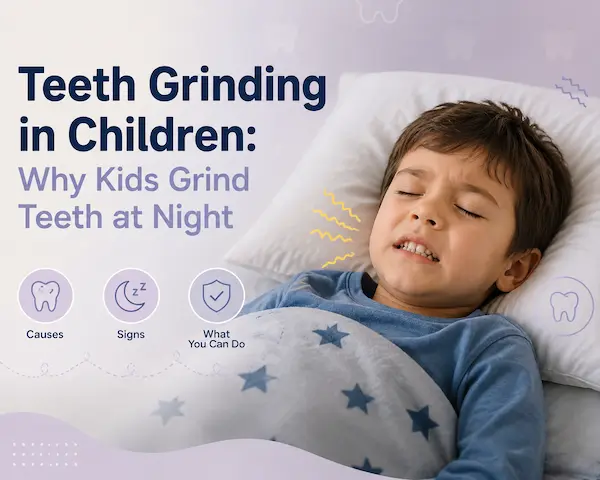
Hearing a scraping sound from your child’s bedroom can be unsettling. Teeth grinding in children is common, especially during sleep, and many do not know it. Occasional grinding may cause no problem, but frequent episodes can lead to tooth wear, jaw discomfort, headaches, or poor sleep.
This guide explains why it happens, what to watch for, and when a dental visit is worthwhile.
Is Teeth Grinding in Children Normal?
Many babies, toddlers, and school-age children grind or press their teeth together occasionally. It may happen during sleep, while concentrating, or as new teeth appear.
A brief episode without pain or tooth changes is usually less concerning than grinding that happens most nights. Focus on whether your child has discomfort, worn teeth, poor sleep, or breathing changes rather than judging the sound alone.
Why Kids Grind At Night
Parents often ask, why do children grind their teeth while asleep? There is not always one clear answer. The causes of teeth grinding in kids may involve tooth development, emotions, sleep quality, discomfort, or several factors together.
Growing Teeth And Changing Bites
As baby teeth appear, loosen, and make room for permanent teeth, the way the upper and lower teeth meet changes. A child may rub the teeth while adjusting to a new bite.
This may explain some cases of baby teeth grinding and toddler grinding teeth, but pain or visible wear should not be dismissed as a normal stage.
Stress, Worry And Excitement
Children may carry tension into sleep even when they cannot explain it. Starting preschool, changing classrooms, moving home, welcoming a sibling, or anticipating a trip can affect bedtime behavior.
Ask calmly whether anything feels difficult or different. Do not blame the child, because nighttime grinding is usually not intentional.
Restless Sleep And Breathing
Some kids grinding teeth at night also snore, sleep with an open mouth, move often, gasp, or wake tired. Grinding alone does not confirm a breathing problem, but several symptoms together deserve attention.
The American Academy of Pediatrics guidance on teeth grinding recommends involving the child’s dentist and doctor when sleep or jaw health may be affected.
Pain, Medicine And Other Triggers
Teething discomfort, an aching ear, mouth irritation, or certain medicines may be linked with grinding in some children. Record when it happens and share recent health, sleep, or routine changes with the dentist instead of trying to identify the cause from sound alone.
Signs of Teeth Grinding Parents May Miss
The signs of teeth grinding in children are not limited to noise. Some children press their teeth together quietly, so morning discomfort or dental changes may be the first clues.
Signs During Sleep
Watch for scraping, repeated jaw movement, restless sleep, snoring, mouth breathing, or frequent waking. A short phone recording can help the dentist understand the sound, but avoid waking your child to capture it.
Signs The Next Morning
Ask about jaw soreness, headaches, sensitive teeth, or pain while chewing. Teeth may look flatter, shorter, chipped, or unusually worn. Younger children may avoid firm foods or seem irritable at breakfast.
Can Grinding Damage Teeth?
Occasional grinding may leave no lasting damage. Repeated or forceful grinding can wear the tooth surface, cause sensitivity, chip a tooth, or strain jaw muscles.
Sound volume does not always match damage. Regular preventative pediatric dental care lets the dentist compare tooth and jaw changes over time.
When Should Parents Worry?
Arrange a dental evaluation when grinding happens most nights, becomes stronger, or occurs with:
- Worn, flattened, chipped, or cracked teeth
- Tooth, jaw, ear, or facial pain
- Frequent morning headaches
- Sensitivity or trouble chewing
- Loud snoring, gasping, or mouth breathing
- Restless sleep or daytime tiredness
Dr. Kat recommends scheduling a dental evaluation when grinding causes pain, affects sleep, or begins wearing down your child’s teeth. A broken tooth, facial swelling, severe pain, or bleeding may need emergency pediatric dental care. Symptoms and tooth damage matter more than one fixed age for stopping.
What Can Parents Do?
People searching how to stop teeth grinding in kids often find vague advice. Use this practical plan instead:
- Track how many nights per week grinding occurs.
- Ask about morning pain, headaches, and chewing discomfort.
- Note snoring, open-mouth sleep, gasping, and tiredness.
- Keep bedtime and wake-up times consistent.
- Reduce screens and active play before bed.
- Use a quiet routine such as reading or gentle music.
- Discuss school or family changes without blame.
- Book routine pediatric dental care if symptoms continue.
Dr. Kat can review your observations, examine your child’s teeth, and help determine whether the grinding only needs monitoring or further care. Never place objects between the teeth or use an adult mouthguard without professional advice.
Do Nightguards Help?
Nightguards for kids create a barrier that may protect teeth from further wear. They do not always stop the jaw movement or remove its trigger, so protection and treatment are different.
Not every child needs one. Age, tooth development, fit, comfort, damage, and frequency matter. A dentist can decide whether a custom mouth guard for children is appropriate and monitor its fit as the mouth grows.
What Will The Dentist Check?
The dentist may examine tooth wear, chips, sensitivity, jaw tenderness, and how the teeth meet. Questions may cover headaches, chewing, sleep, snoring, medicines, and recent changes at home or school.
Dr. Kat can compare findings over time, explain whether monitoring is enough, and recommend protection or further evaluation through a pediatric dental assessment.
Protecting Your Child’s Smile
Most grinding can be monitored calmly, but pain, tooth wear, headaches, snoring, and poor sleep deserve attention. Keep a short symptom record and bring it to the dental visit. Early evaluation can show whether your child needs monitoring, tooth protection, or help exploring another trigger.
Why Choose Everyday Smiles Pediatric Dentistry?
Everyday Smiles Pediatric Dentistry creates positive dental experiences where children feel comfortable, parents feel informed, and every visit supports healthier smiles. Dr. Kat provides gentle, personalized care for babies, children, and teens in New Windsor. She checks tooth wear, jaw comfort, bite changes, and sleep-related concerns, then explains each option clearly.
Families receive practical guidance, age-appropriate treatment, and ongoing monitoring in a welcoming pediatric dental setting designed to build trust comfortably.
Teeth Grinding FAQs
Should I Wake My Child When They Grind Their Teeth?
Usually, no. Waking a child can interrupt sleep without preventing the next episode. Instead, note how often grinding happens, check for morning pain, and arrange a dental visit if it occurs frequently or damages teeth.
Do Children Usually Outgrow Teeth Grinding?
Many children grind less as their teeth, jaws, and sleep patterns develop, but there is no single age that applies to everyone. Ongoing pain, tooth wear, headaches, or poor sleep should be checked rather than ignored.
Can Grinding Damage Baby Teeth?
Yes, repeated force can flatten, chip, or make baby teeth sensitive, although occasional grinding may cause no harm. A dentist should examine visible wear or pain because healthy baby teeth support eating, speech, and spacing.
Does Every Child Need A Nightguard?
No. A nightguard may help when grinding is wearing teeth or causing pain, but fit and timing matter while a child’s mouth is growing. A pediatric dentist should decide whether monitoring or a custom guard is safer.
Can Stress Cause Nighttime Teeth Grinding?
Stress may contribute, especially after changes at school, home, or bedtime, but it is not the only possible cause. Track patterns, use a calm evening routine, and seek dental advice when grinding continues or causes symptoms.