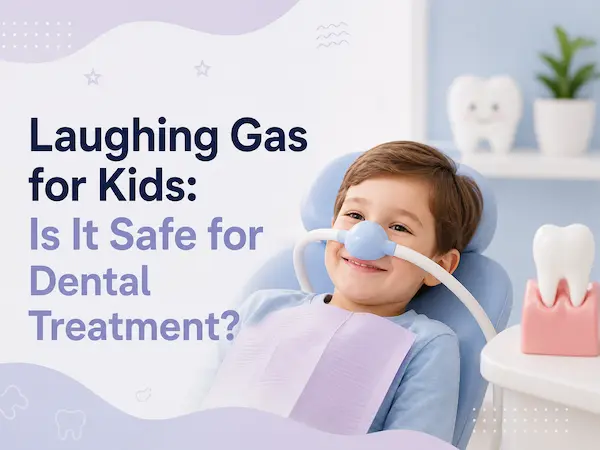
A child who fears a filling or tooth removal may struggle to sit still, open wide, or cope with unfamiliar sounds. Laughing gas for kids can make treatment feel calmer without putting most children fully to sleep. Parents still need clear answers about safety, side effects, pain control, and recovery.
What Is Laughing Gas for Kids?
Laughing gas is a mild calming option used in pediatric dentistry to help children feel relaxed during dental treatment. The child breathes a carefully controlled mixture through a small mask placed over the nose while the dental team watches comfort, breathing, and responsiveness.
Nitrous oxide for children begins working within minutes, helping reduce dental anxiety, fear, and sensitivity to sounds. Most children stay awake, follow instructions, answer questions, and recover quickly after the mask is removed. It does not usually make a child fully unconscious.
Is Laughing Gas Safe for Kids?
Laughing gas is generally safe for suitable children when a trained dental team gives and monitors it. The American Academy of Pediatric Dentistry guidance describes it as a safe and effective way to control fear during children’s dental treatment.
Good laughing gas safety starts with reviewing health history, medicines, recent illness, and previous reactions. Dr. Kat helps parents understand whether this form of pediatric dental sedation fits their child and the planned procedure.
How Dentists Keep Children Safe
The amount can be adjusted throughout treatment. The team watches breathing, comfort, skin color, and responsiveness. If a child feels dizzy, upset, or unwell, the gas can be reduced or stopped.
When Can Laughing Gas Help?
Laughing gas may help a child who is nervous, has a strong gag reflex, struggles to sit still, or needs a longer procedure. It is often considered for composite fillings, crowns, or a tooth extraction.
It can also support a child after a difficult visit. However, dental anxiety in children varies. Reassurance may help mild worry, while intense fear may require another plan.
What Will Your Child Feel?
Your child may feel warm, light, tingly, calm, or slightly floaty. Some children giggle, but many do not laugh. Sounds may seem farther away.
The child should remain awake and follow simple directions. Explain beforehand that the mask helps the body relax but does not remove their voice or control.
What Happens at the Dental Visit?
Before Treatment
Follow the office’s food and drink instructions. A heavy meal too close to treatment may increase nausea, but rules vary by procedure. Dr. Kat can guide parents based on the planned care.
Report a cold, blocked nose, cough, breathing concern, or new medicine. Tell your child the mask rests over the nose and they only need to breathe normally.
During Treatment
The mask is placed gently, and the gas is introduced gradually. The dental team keeps talking with your child and checking comfort. The mouth stays uncovered for treatment.
A kid-friendly dentist may let the child see or touch the mask first. This simple practice can reduce fear and improve cooperation.
After Treatment
The gas is stopped, and the child breathes oxygen briefly. Most children feel normal again quickly. Recovery can still depend on the dental procedure, numbing medicine, and individual response.
What Side Effects Can Happen?
Possible nitrous oxide side effects include nausea, dizziness, headache, sweating, or temporary tiredness. These effects are usually brief and may improve when the amount is lowered or stopped.
Tell the team if your child feels sick, panicked, very sleepy, or uncomfortable. After leaving, call the office if vomiting continues, behavior does not return to normal, or anything concerns you.
When Is Laughing Gas Not Suitable?
Laughing gas may not work well with a blocked nose because it must be breathed through the nose. It may also be unsuitable when a child refuses the mask, cannot follow directions, has breathing-related health concerns, or needs extensive care.
Children with sensory or communication needs may benefit from visual preparation or support from a special needs dentist for kids. Suitability depends on the individual child, not age alone.
Does Laughing Gas Stop Pain?
Laughing gas mainly reduces fear and makes treatment easier to tolerate. It may make discomfort less noticeable, but it does not always replace numbing medicine.
For a filling, crown, or tooth extraction, the dentist may still numb the tooth and gum. Laughing gas helps with relaxation while the numbing medicine controls pain in the treatment area.
How Does Laughing Gas Compare With Other Calming Options?
Calm explanations, breaks, and distraction may be enough for mild worry. Laughing gas works quickly, keeps the child awake, and usually wears off quickly. Medicine taken by mouth may cause more sleepiness and a longer recovery. Deeper options may suit severe fear, limited cooperation, or extensive care.
Compare how each option is given, whether the child stays awake, and expected recovery.
How Can Parents Decide?
Ask why laughing gas is recommended, whether numbing medicine is needed, how your child will be watched, and what to do if the mask is refused. Confirm food instructions and expected recovery.
Dr. Kat can help parents compare comfort choices using the child’s fear level, health history, and treatment needs. Reviewing available pediatric dental services can also make the plan easier to understand.
Choose a Calm Dental Plan
Laughing gas can make dental care easier when fear or a strong gag reflex interferes with treatment. It is not right for every child, and it does not always replace numbing medicine.
Share your child’s medicines, health history, recent congestion, sensory concerns, and previous dental experiences. A clear conversation with the dentist can help you choose a safe plan that matches the procedure and your child’s ability to cope.
Why Choose Everyday Smiles Pediatric Dentistry?
Everyday Smiles Pediatric Dentistry helps families understand each comfort option before treatment begins. Dr. Kat considers your child’s fears, health history, communication needs, and planned care. Parents receive clear preparation and recovery guidance, while children are supported with a calm approach designed to make necessary dental visits feel more manageable.
Frequently Asked Questions
Will Laughing Gas Put My Child to Sleep?
No. Laughing gas for kids usually keeps the child awake, relaxed, and able to answer questions. A child may feel dreamy or light, but should remain responsive unless another comfort method is also used.
How Long Does Laughing Gas Last?
Its calming effect continues while your child breathes through the nose mask. After the gas is stopped and oxygen is given, most children feel normal within minutes, though the dental procedure may affect recovery.
Can My Child Eat Before Laughing Gas?
Follow the dental office’s instructions. Many children are told to avoid a heavy meal shortly before treatment because a full stomach may increase nausea. Rules may change when another comfort option is planned.
Is There a Minimum Age for Laughing Gas?
There is no single age that suits every child. The dentist considers whether the child can accept the nose mask, breathe through the nose, follow directions, and complete the planned treatment safely.
What If My Child Refuses the Nose Mask?
The team may show the mask, let the child touch it, practice breathing, or use simple distraction. If the child still refuses, treatment should pause while the dentist discusses another safe comfort plan.